About this treatment
Healthy milk teeth matter: they hold space for adult teeth, help with speech and chewing, and set habits that last a lifetime. Regular visits catch decay and alignment problems early, while they are small and simple to treat.
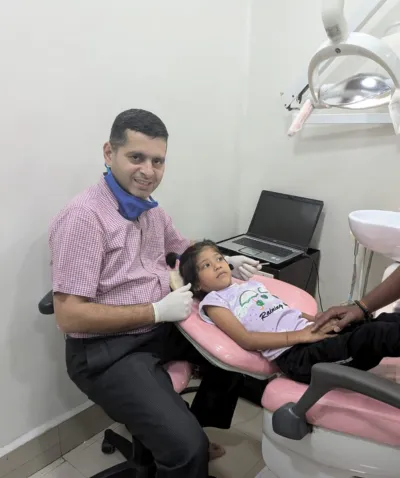
Children at the clinic are seen by our paediatric dentist (pedodontist), who is trained to make dental care a calm, positive experience for young patients.
Whether this treatment is right for you, and what result to expect, depends on an examination by a dentist. This page is general information, not a diagnosis.
Who may benefit
- Your child’s first tooth has come through
- Brown or black spots on milk teeth
- Toothache, swelling or a broken tooth after a fall
- A milk tooth lost early
- Thumb sucking or mouth breathing past the toddler years
What we offer
First dental visit
A short, friendly visit to check the teeth and show parents how to brush them.
Fluoride treatment
A quick application that strengthens enamel and helps prevent cavities.
Fillings and care for milk teeth
Gentle treatment of decay in baby teeth so they last until the adult teeth arrive.
Space maintainers
A small custom device that holds open the gap left by a milk tooth lost early, so adult teeth come in straight.
Habit and diet advice
Practical guidance for children and parents on brushing, snacks and habits like thumb sucking.
Consultation and what it involves
Getting comfortable
Your child meets the dentist, sits in the chair and sees the instruments before anything starts.
A gentle check
Teeth, gums and bite are checked, with X-rays only when really needed.
Prevention and treatment
Fluoride, sealants or fillings as needed, explained to your child at their level.
Every six months
Regular visits keep small problems small and visits routine.
Times and number of visits are typical. Your dentist will confirm them for your case.
Benefits and limitations
Benefits
- Problems caught early, when treatment is simple
- Children learn that the dentist is a safe place
- Prevention that reduces future treatment
- Guidance for parents on brushing and diet
Limitations and risks
- Some very young or anxious children need more than one visit to complete treatment
- Prevention works only alongside brushing and diet at home
- Some problems, such as crowding, need orthodontic care later
Recovery and aftercare
- After numbing, watch that your child does not bite their lip or cheek until feeling returns
- Brush twice a day with a fluoride toothpaste suited to their age
- Limit sugary snacks and drinks between meals
- Keep six-monthly check-ups
You will receive aftercare instructions specific to your treatment. If something worries you afterwards, call the clinic.
Questions
When should my child first see a dentist?
By the first birthday, or within six months of the first tooth appearing. Early visits are short and mostly about getting used to the clinic.
Can I stay with my child?
Yes. Parents are welcome in the room. Many children feel more at ease with a parent nearby.
Do milk teeth really need fillings if they will fall out?
Often, yes. Some milk teeth stay until the age of 11 or 12. Untreated decay can cause pain, infection and damage to the adult tooth growing underneath.